
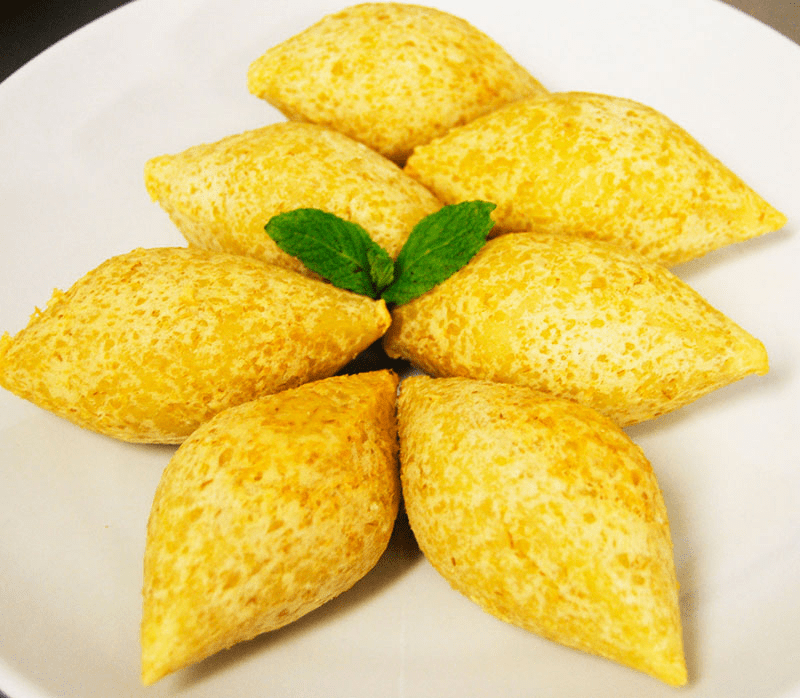
A kibbeh machine automates the portioning, filling and shaping of kibbeh for commercial production. For stuffed kibbeh, a forming and encrusting machine brings together an outer mixture and a separate filling, forming individual pieces according to the selected configuration.
For restaurants, catering businesses and food manufacturers, automation can reduce repetitive hand shaping and help produce more consistent portions. Choosing suitable equipment starts with your recipe, desired product weight and daily production target.
How does a kibbeh machine work?
For stuffed kibbeh, the outer mixture and filling are loaded separately. The machine feeds both components through the forming system, enclosing the filling inside the outer layer before dividing and shaping the product.
Settings and tooling determine the resulting portion and shape. The appropriate configuration depends on the recipe, filling characteristics and finished product you want to produce.
Cooking and freezing are separate stages that must also be considered when planning the process.
What matters when automating a kibbeh recipe?
A recipe that works well when shaped by hand should be evaluated on the selected machine. A production trial helps determine suitable preparation methods and settings.
Outer mixture consistency
For bulgur-based kibbeh, preparation variables such as hydration, grinding and temperature are important points to document during testing.
The objective is to obtain a mixture that feeds consistently and forms the desired outer layer. Share your preparation method with the equipment supplier so the trial reflects your actual production conditions.
Filling texture and ingredient size
Describe the filling ingredients, texture and preparation method, including any pieces of meat, onion or nuts. These details help the technical team evaluate the feeding system and suitable configuration.
Different recipes may require different adjustments. Compatibility should be confirmed for the product you intend to manufacture.
Outer layer and filling proportion
The balance between the outer layer and filling affects the eating experience and ingredient use.
During testing, cut open sample pieces to evaluate filling distribution, layer thickness and closure. Check several products across the trial rather than judging a single piece.
Shape and performance after cooking
Assess the formed kibbeh against your desired appearance, including its length and pointed ends where applicable.
Then evaluate the product using your intended cooking method. For frozen products, include freezing and subsequent preparation in the assessment.
How to evaluate kibbeh machine capacity
Output depends on the model, portion weight, recipe and machine configuration. A maximum pieces-per-hour figure should not be treated as the expected output for every kibbeh size.
When comparing equipment, request production information for your specific application:
- Total weight per piece.
- Outer mixture and filling proportions.
- Required shape and dimensions.
- Target pieces and kilograms per hour.
- Available working hours per shift.
Include loading, cleaning and product changes when estimating daily production. Check that preparation, cooking and freezing stages can support the planned forming output.
Bralyx MKR machines for kibbeh production
Bralyx’s MKR line includes the Big 6.0 MKR and Big 8.0 MKR, models to discuss with the technical team when evaluating kibbeh production.
The Big 8.0 MKR features an MKR feeding system designed to handle dense mixtures, including kibbeh. Its independent motors allow adjustments to the outer layer and filling quantity.
Compare the models against your recipe, required output and available production space. Ask Bralyx to confirm the appropriate configuration and expected performance for your application.
Explore the Big 6.0 MKR and Big 8.0 MKR to learn more.
Watch a Bralyx kibbeh machine in action
Watch chef Omar in Dubai producing kibbeh with a Bralyx machine. The video shows the forming process and the products as they leave the equipment.
What should you prepare for a kibbeh production trial?
A useful trial starts with a clear product brief. Provide:
- Your outer mixture and filling recipes.
- Ingredient preparation and operating temperatures.
- Desired portion weight, dimensions and shape.
- Reference samples or photographs.
- Cooking and freezing methods.
- Current output and planned production volume.
Agree on what will be evaluated, including weight consistency, appearance, filling distribution and finished-product quality.
Documenting the trial helps your team assess the equipment and establish a reference for future production.
Plan your kibbeh production with Bralyx
Looking to automate hand shaping or expand your kibbeh production? Share your recipe, target product weight and daily production requirements with the Bralyx team to discuss suitable equipment and the possibility of a product trial.