
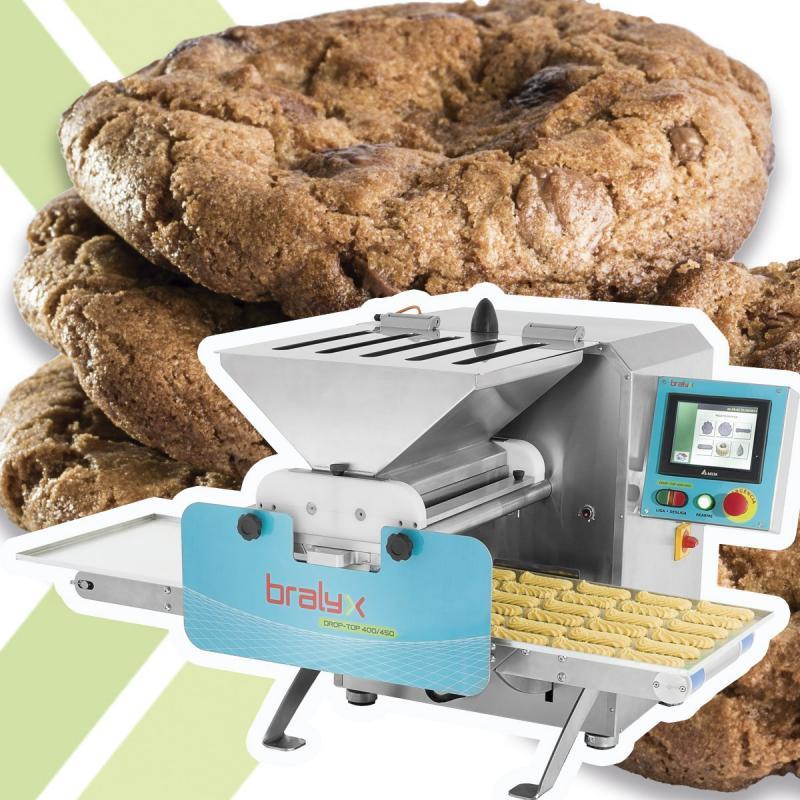
A cookie depositor machine portions dough and deposits it onto baking trays. Depending on the equipment and configuration, it can produce different shapes and sizes using nozzles or a wire-cutting system.
For bakeries, confectionery businesses and food manufacturers, choosing the right equipment starts with the dough and the finished cookie. Recipe co
How does a cookie depositor machine work?
Prepared dough is loaded into the machine’s hopper and fed through the selected depositing or cutting system. Portions are placed on trays according to the configured layout.
The forming method depends on the dough and desired result. Some products are deposited through nozzles, while others are formed using wire cutting.
The machine handles portioning and forming. Mixing, baking, cooling and packaging remain separate stages that must support the planned production volume.
Depositing or wire cutting: which process do you need?
Depositing through nozzles
Depositing is an option for doughs that can pass through suitable nozzles and release onto a tray. Nozzle selection and machine settings influence the shape and portion.
Evaluate whether the dough holds the intended shape after depositing and how it spreads during baking. The appearance of the raw portion alone does not determine the finished cookie.
Wire cutting
A wire-cutting system cuts portions from dough fed through a forming die. It is an option to evaluate for firmer cookie doughs, subject to recipe and equipment compatibility.
If your recipe contains chocolate chips, nuts or other inclusions, provide their dimensions and proportion when discussing the application. Their compatibility with the feeding and cutting system should be confirmed through testing.
Enclosed fillings
Producing a cookie with a separate filling enclosed inside the dough involves a different process from depositing a single mixture.
If you want to make filled cookies, specify the dough, filling and desired structure. A forming and encrusting solution may be more appropriate, depending on the application.
What should you evaluate before choosing a cookie depositor?
Dough compatibility
Share the recipe and preparation method with the equipment supplier, including dough temperature, resting time and inclusions.
Use representative production dough in a trial. Testing a different formulation may not show how your own recipe will perform.
Portion weight and baked results
Check several portions for weight and appearance, then bake them using your intended process.
Evaluate the finished cookies for spread, thickness, texture and consistency. This helps assess the complete result rather than only the machine’s forming stage.
Tray size and product spacing
Confirm that your trays are compatible with the equipment and that the layout allows enough space for the cookies to spread during baking.
Consider how trays will move between depositing, baking and cooling, including any handling required between stages.
Capacity and changeovers
Request output information for your recipe, portion weight and selected operating system.
Include dough loading, tray handling, cleaning and product changes when estimating daily production. Compare this output with your oven capacity and cooling space.
Cleaning and recipe changes
Ask how food-contact components are removed and cleaned, and what is involved in changing nozzles, dies or dough types.
If you manufacture products with different allergens, include your cleaning and cross-contact procedures in the evaluation.
Bralyx Drop Top 400/450 Plus for cookie production
The Bralyx Drop Top 400/450 Plus combines depositing, dosing and wire-cutting functions, with configurations for different dough consistencies and product formats.
Its touchscreen stores up to 100 recipes. Removable hoppers, rollers and nozzles provide access for cleaning and product changes.
For cookie production, discuss your dough, desired shape and portion weight with Bralyx to identify the appropriate operating system and accessories. Available functions should be matched to the configuration included in your quotation.
Watch the Bralyx Drop Top in action
See the Bralyx Drop Top 400/450 Plus in operation and observe how dough portions are formed and placed on baking trays.
What should you prepare for a production trial?
Provide a short product brief covering:
- Your recipe and dough preparation method.
- Dough temperature and resting conditions.
- Inclusion types, dimensions and proportion.
- Target portion weight and cookie shape.
- Tray dimensions and baking conditions.
- Current and target daily production.
- Reference samples or photographs.
During the trial, evaluate portioning, tray layout and baked results. Record the configuration and conditions used so your team has a clear reference when comparing options.
Find the right cookie production solution with Bralyx
Planning to automate cookie portioning or expand your product range?
Share your recipe and production requirements with Bralyx to discuss depositing, wire cutting or forming and encrusting options for your application.
Talk to the Bralyx team about your cookie production.